There’s this thing that happens all.the.time on cooking shows.
Where a judge puts a spoonful of *something* in their mouth.
Purses their lips.
Puts the spoon down with a flourish.
Looks dead in the eye of the contestant (who is standing there all nervous with sweat on their brow).
And asks:
“Did you taste this?”
Sometimes the answer is yes.
Sometimes the answer is no.
But one thing remains true:
The dishes that don’t get tasted as they’re cooked?
They never win.
(The prize, the judges’ hearts…they never win *any* of it.)

The same is true for brands.
No taste-y? No results-y.
No brand wants to eat tasteless copy (and no audience does either)
A friend called me last week when I was sweating my way through a YouTube leg workout, just to say:
“My company hired a copywriter who is big in our niche and they didn’t get our brand at all. Now I have to rewrite it all with ChatGPT, and I know it’s going to be crap.”
I lamented a while with my friend while wiping away my sweat.
Then I asked THE all-too-important question (the one I was already pretty confident I knew the answer to):
“Well, how much did they talk to you and your people?”
Her answer?
“We had a quick kickoff call and that was about it.”
No mention of customer interviews.
No mornings spent plowing through analytics.
No psychological deep dives to get centered on who they wanted to be and how they wanted to show up as a brand.
Just…a quick little kickoff call.
One that ended with copy they’d prefer to re-outsource to ChatGPT.
Sad as it may be, this isn’t exactly an uncommon scenario in business-land.
And it’s the kind of thing that makes founders and CMOs wonder if they should just skip over the whole hire a strategist/copywriter thing to fast-track right on over to AI.
But it shouldn’t be the kind of nightmare scenario that makes you run to ChatGPT.
(That will just make you miss out on the 99% year-over-year growth that can happen when copy is done right.)
What it should be?
Is a call for you to look for a copywriter who tastes more.
One who prioritizes:
- Customer research
- Careful analysis of your numbers
- Buyer psychology
- Legit conversations where they dig into the who, what, and all-important why of your brand
Rather than the alternative:
Throwing together a bunch of ingredients that they *think* might go well together and calling it a day.
You mentioned 99% year-over-year growth. If tasty copy can do that (and tasteless copy can’t) then why do people even, like, go tasteless?
If you’ve ever asked the question “have you worked in my market before?” then you are part of the problem!!!
I’m kidding. That’s totally not true. I’m sure you’re a joy and not a problem at all.
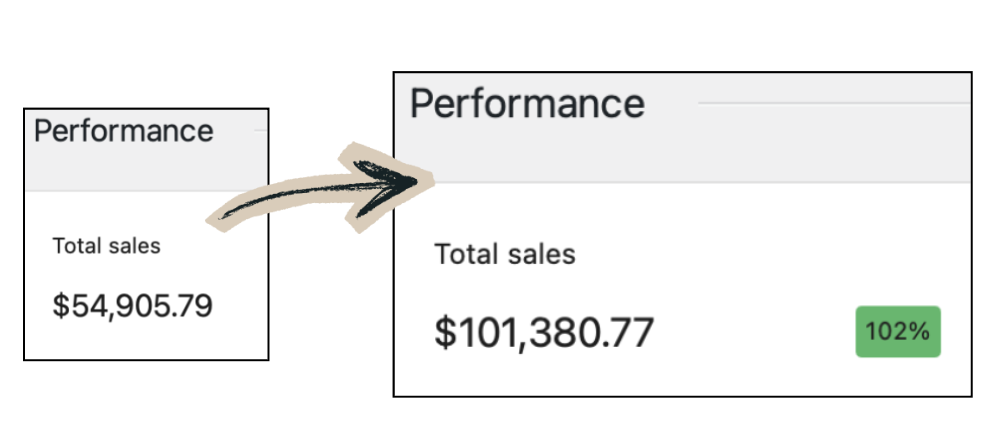
Buttttt that question *can* get in the way of real results. (Like the time my 7-figure client stopped asking it and went from a $54,900 Black Friday weekend to a $101,380 one. Not too shabby.)
Why?
Well, if you pardon me one more cooking-themed metaphor:
Let’s say you’re baking a pie for the first time
It’s a blueberry pie. And you’re bringing it to a birthday party.
You want it to be good. You want it to impress. You want people to absolutely salivate with a need to gobble it up when they see it.
So you do everything exactly by the book. You:
- Find a recipe that has been rated 5-stars online
- Follow that recipe exactly to the letter (leveling off your flour with a knife, fully preheating the oven, letting your butter get super cold so your crust is flaky as fork)
- Taste and adjust salt/sweetness/acid levels as you go
The pie goes great. Everybody loves it.
So you make it again.
And again.
>>> fast forward a few pies >>>
You start to feel so comfortable making that blueberry pie that you skip some steps.
- You eyeball the ingredient amounts
- Use butter that has been growing warm for an hour or two in the grocery bag
- Substitute fresh blueberries for frozen
It’s not that this pie comes out bad.
But it’s not as fundamentally good as it was before.

Steps were missed.
Corners were cut.
Ingredients were under-measured. Or under-baked. Or under-seasoned.
Which, if we take this metaphor out of pie-land….
Becomes the difference between your audience gobbling up what you’re giving out and thinking “ehhhhh, maybe I’ll save room for what some competitors have got to give.”
Which has a direct line on your conversions. And your revenue potential.
Because when you say:
“Oh, I already know this market”
Instead of:
“Oh, let me find out about this brand’s relationship to their market.”
When you say:
“Oh, I already know this audience.”
Instead of:
“Oh, let me do the necessary deep dives to figure out what messages their specific audience needs to hear, at which stages, and with which frequency to consistently convert.”
Or even:
“Oh, I’m a good copywriter.”
Instead of:
“I’m a good copywriter, but that’s because I’m fully-as-fork committed to knowing the audiences of the brands I write for.”
Then you miss out on copy that actually:
- helps you go to market with the right strategy, to quit putting beaucoup-de-dollars into ad spend or other visibility initiatives that don’t work
- fills the gaps that leave your people questioning whether you’re the right thing for them — or whether a competitor can wet their whistle to a deeper degree
- gives you a persuasion framework that you can build on for a long time, one that takes into account the buyer psychology-backed principles of what your audience actually needs to hear to buy in
But does this really make that much of a difference? Isn’t a good copywriter just…a good copywriter?
Yes, it makes a difference. A big one.
And no, a good copywriter isn’t just a good copywriter. They make themselves one through the tasting and audience research we’ve been talking about.
How do we know that’s true?
Well, the impact of deep customer research is well-documented.
“61% of new product launches fail within their first two years, mainly due to insufficient customer understanding.”
^ That right there is a line published in the Journal of the Academy of Marketing Science, referencing a study on failed launches done in 2022.
In fact, that original study goes one step further. Claiming:
“In a rapidly evolving environment, diagnosing consumer response to new innovations soon after launch is the key to its long-term success.”
Talking to customers (and implementing strategies accordingly) helped one company’s ad engagement rate jump from 1.45% to 6.59%.
And helped another company land a 71% increase in demo signups.
So…what? I just need to find a copywriter who knows how to taste?
Not quite!
You need to find a copywriter who knows that without tasting (in food and in copy), you’ve got nothing.
And who is committed to tasting:
Again and again and again.
Because the truth is, one taste rarely does it.
In cooking, much like in marketing strategy:
You need to taste. Experiment. Add ingredients. Balance things out.
Until you end up with a 5-star Michelin star meal.
Or a 99% or more revenue increase, as it were.
Because the difference between tasting or not tasting?
That’s the difference between plateau and growth.
(Pssssstttt….in case you can’t tell, I’m all about taste. So let’s put our brains together in support of your sales.)